 Critters is coming to Kickstarter.
 In this chapter
- Keywords
- Shuffle
- Skewer
- Burrow
- Sell
- Trash
- Gift
- Discount
- Snatch (discounts)
- Refresh
- Steal (crops)
- Discard
- Replant
- Reset (deck)
- Unsellable
- Holdable
- Refundable
- Icons
- Exchange
- Recycle
- Tips for beginners
- Production first
- Keep your deck lean
- Watch the Market, and your Rivals
- It's a marathon, not a sprint
Reference
Keywords
Card effects use a shared vocabulary. Three families are worth noticing: keywords that move cards within your deck (, , ), keywords that remove cards from your deck (, , ), and keywords that work on the Market (, , ). The rest are one-offs and card labels.
Shuffle
Place the card on top of your Draw pile, then shuffle your deck.
If your draw pile was empty, the Shuffled card becomes its only card.
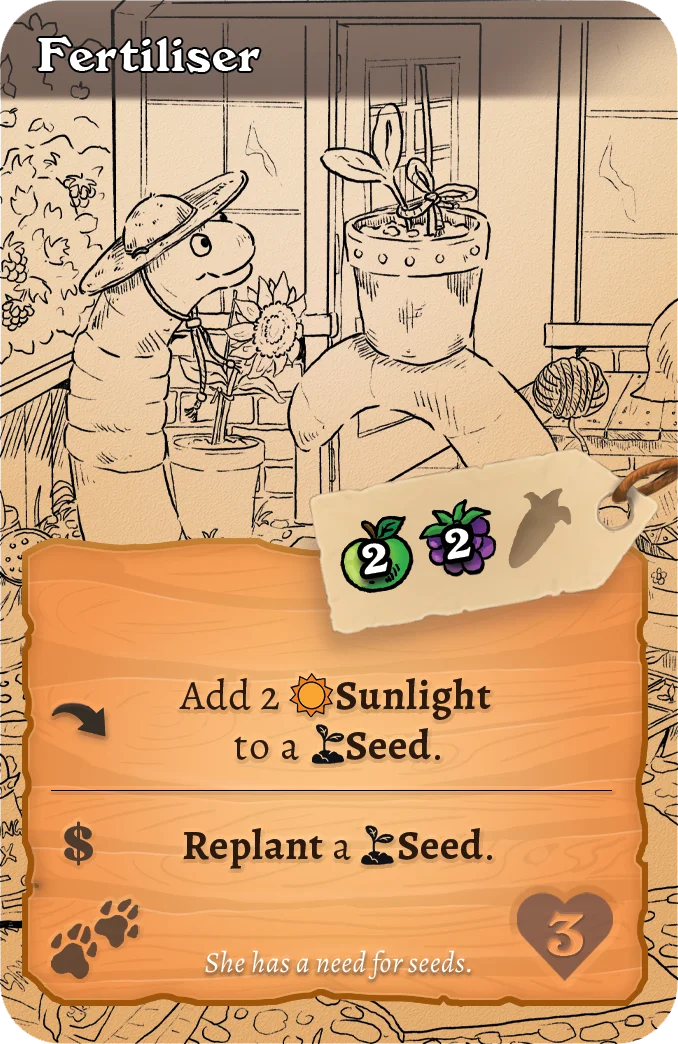
Example of a Shuffle effect.
Skewer
Place the card on top of your Draw pile: you'll draw it soon.
If your draw pile was empty, the Skewered card becomes its only card.
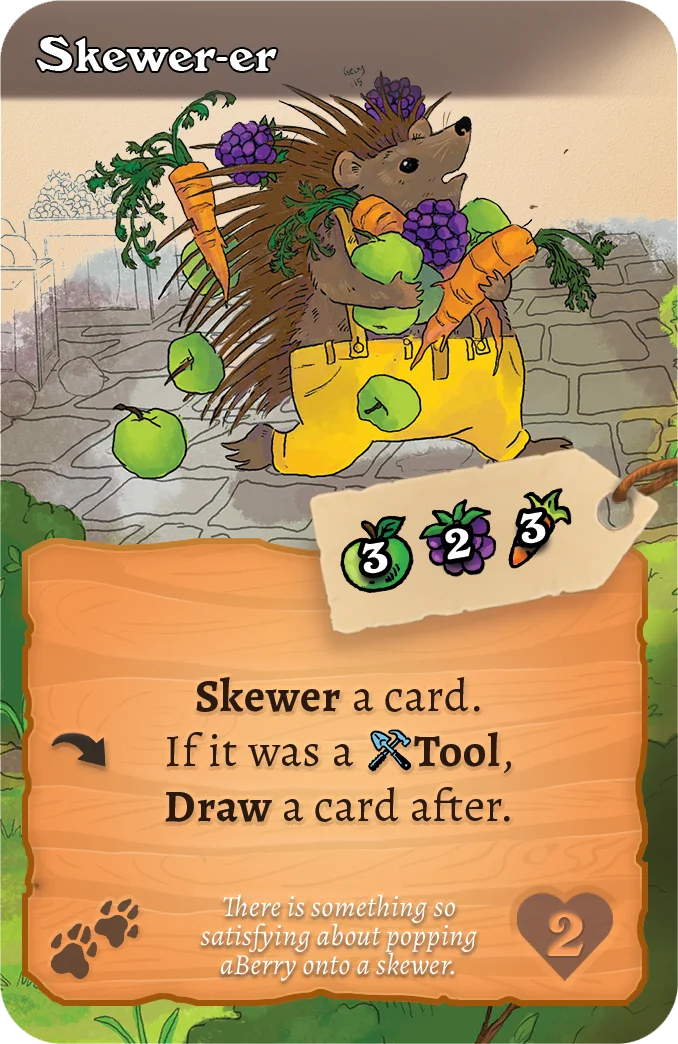
Example of a Skewer effect.
Burrow
Place the card on the bottom of your Draw pile.
If your draw pile was empty, the Burrowed card becomes its only card.
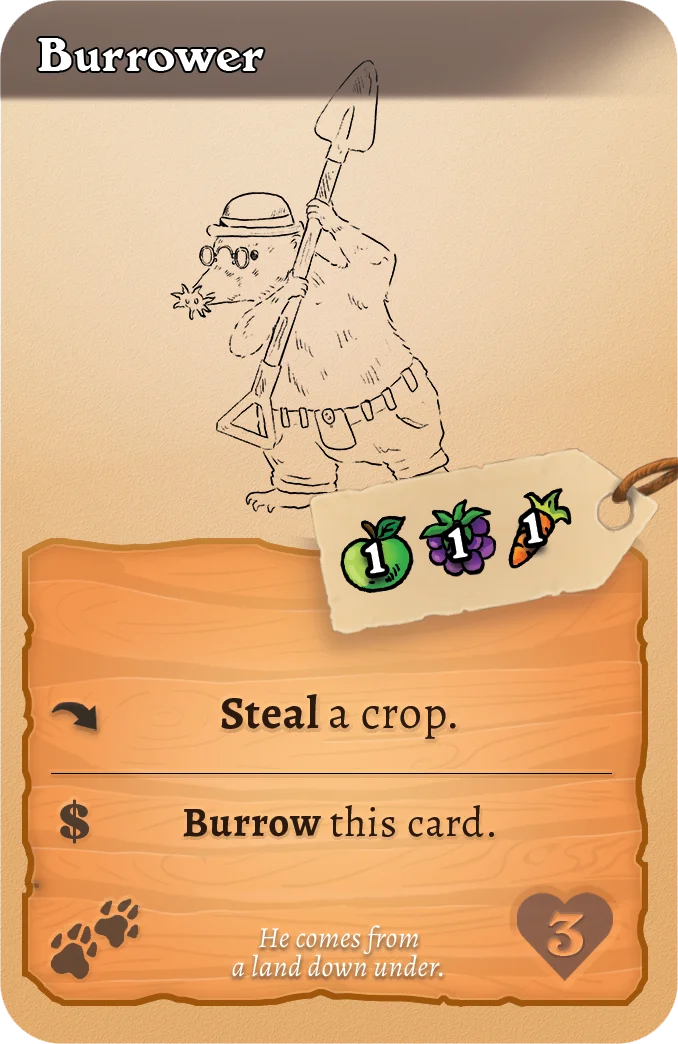
Example of a Burrow effect.
Sell
Remove the card from your deck entirely: gain crops equal to its Price tag, then place it in the Farm discard pile in the Market.
- If the card has an effect, it triggers after the crops are gained and the card removed.
- Then any "After you Sell..." effects trigger.
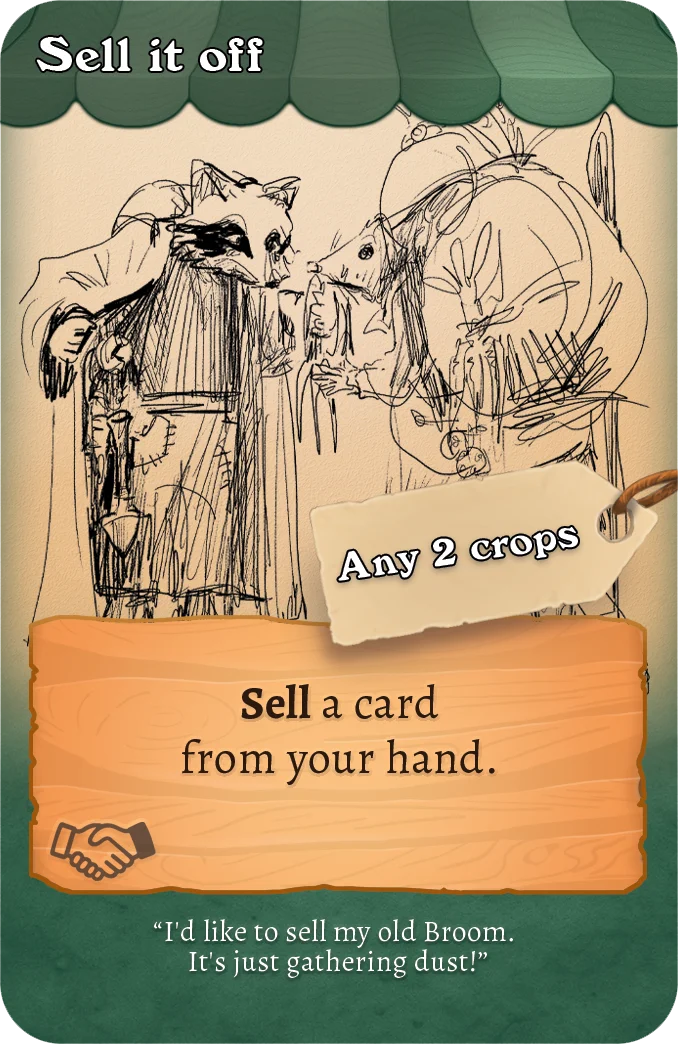
Example of a Sell effect.
Trash
Remove the card from your deck entirely, with no payout: place it in the Farm discard pile in the Market.
- If the card has a effect, it triggers after the card is removed.
- Then any "After you Trash..." effects trigger.
Gift
Remove the card from your deck and place it in a Rival's Discard pile. It's the thought that counts.
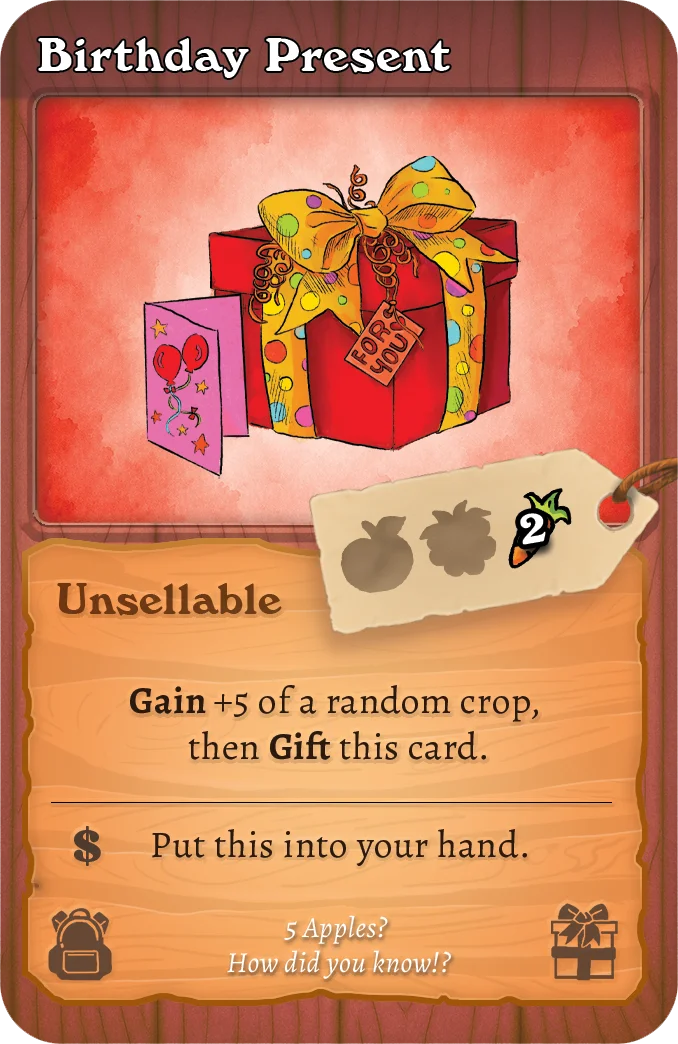
Example of a Gift card.
Discount
Roll the Yellow Die, then place a crop counter matching the rolled crop onto every Farm card in the Market.
Each counter on a Market card reduces its price by 1 of that crop. A card can never be discounted below a cost of 0 in any crop:
- Base cost 1 Apple, 2 Carrots, 0 Berries…
- …allows at most 1 Apple discount and 2 Carrot discounts, and never a Berry discount.



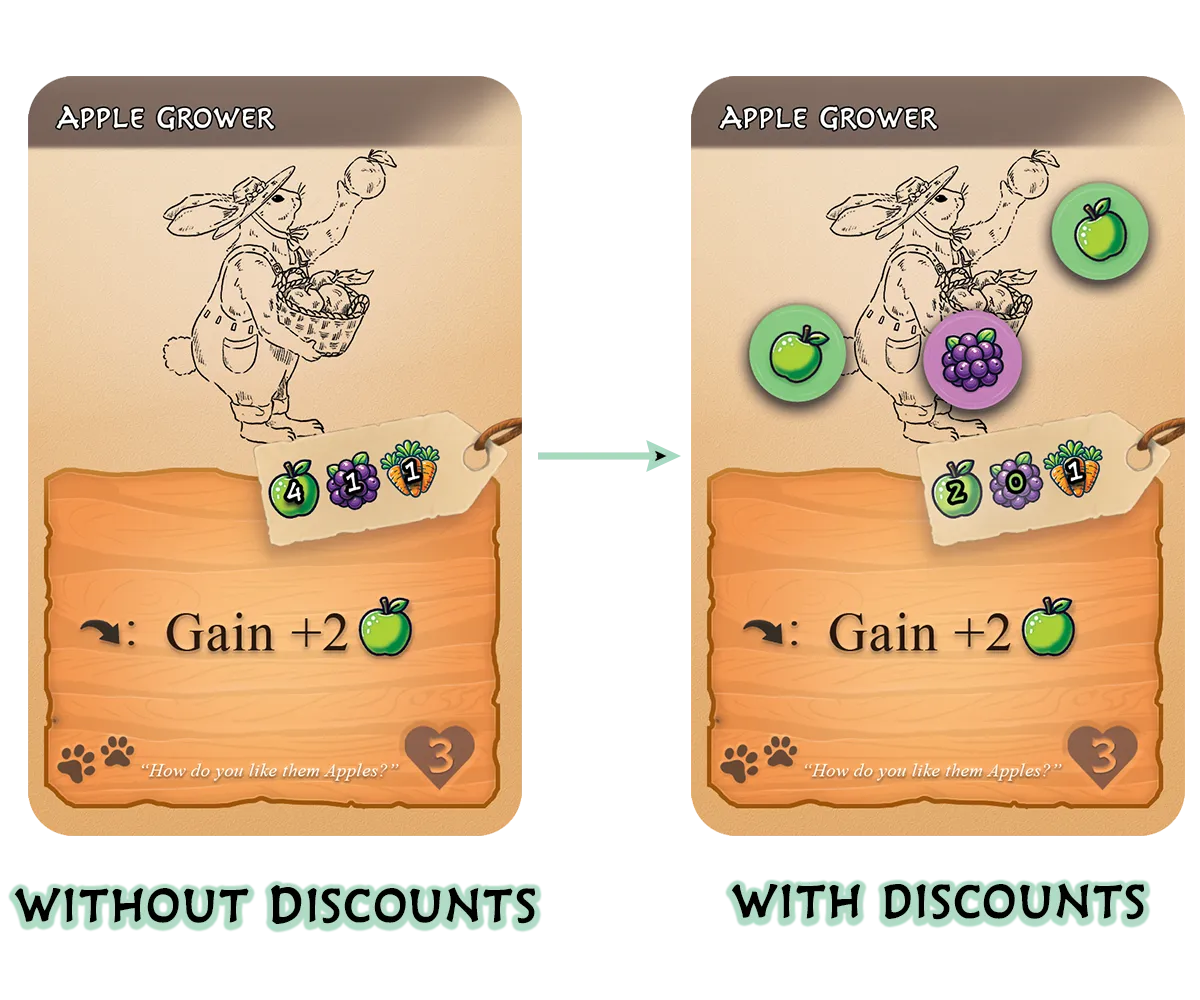
Discounts example.
Snatch (discounts)
Choose a Market card holding Discount crop counters. Take those counters into your Stash: the card's price returns to normal.
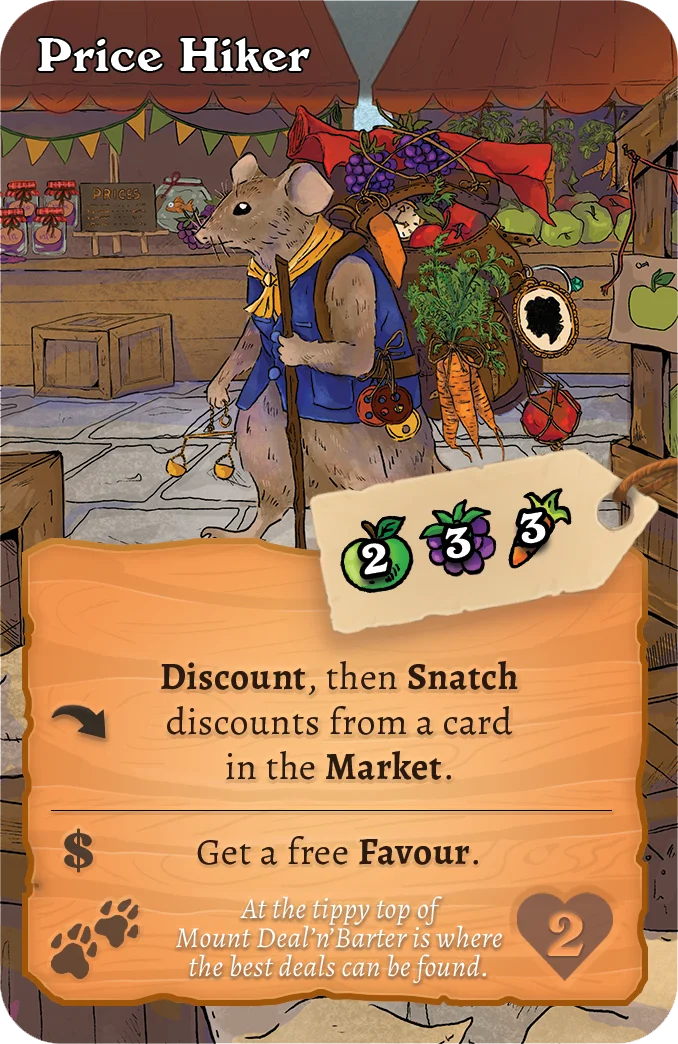
Example of a Snatch discounts effect.
Refresh
Choose a card in the Market to discard, and replace it from its row's deck.
- Refreshing several cards? Choose all of them before any are replaced.
- If an effect names a whole Market row, you refresh the entire row. No picking individual cards.
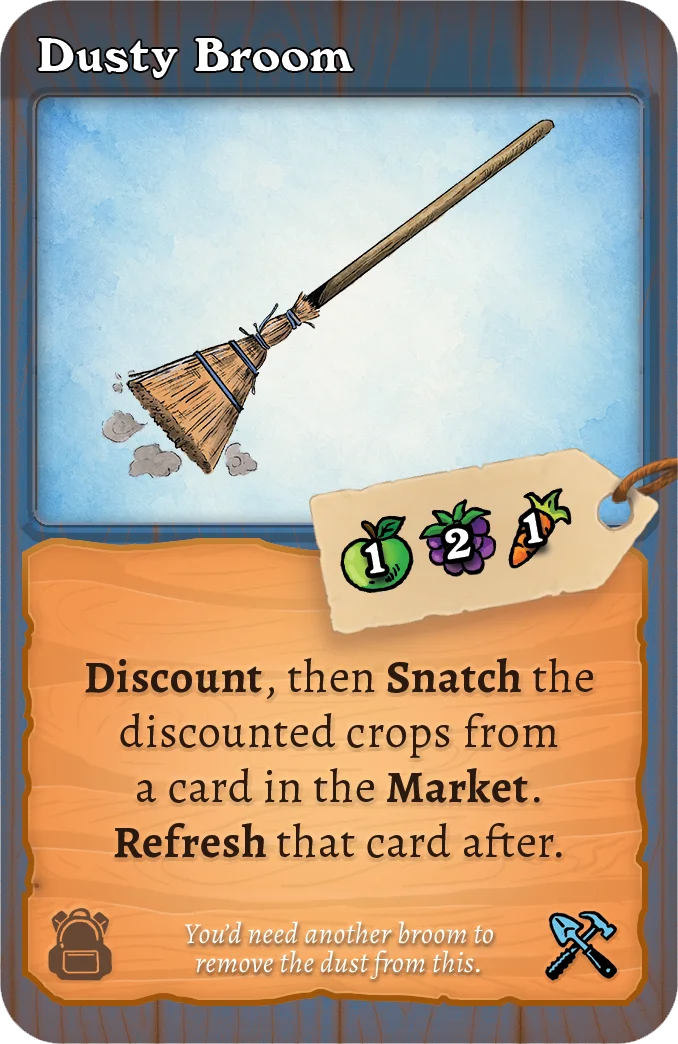
Example of a Refresh card.
Steal (crops)
Take the crops from a Rival's Stash and add them to yours.
- If no crop type is specified, you choose what to take.
- If a type is specified and the Rival has none of it, the Steal fizzles.
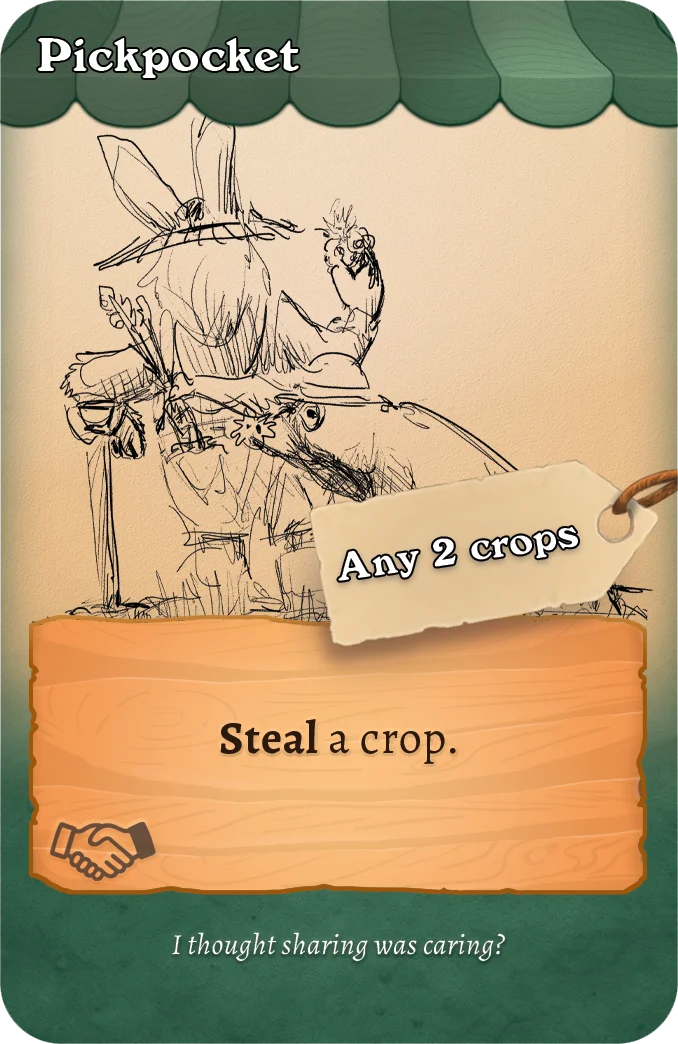
Example of a crop Steal card.
Discard
Put a card from your hand into your Discard pile. You can no longer play it this cycle.
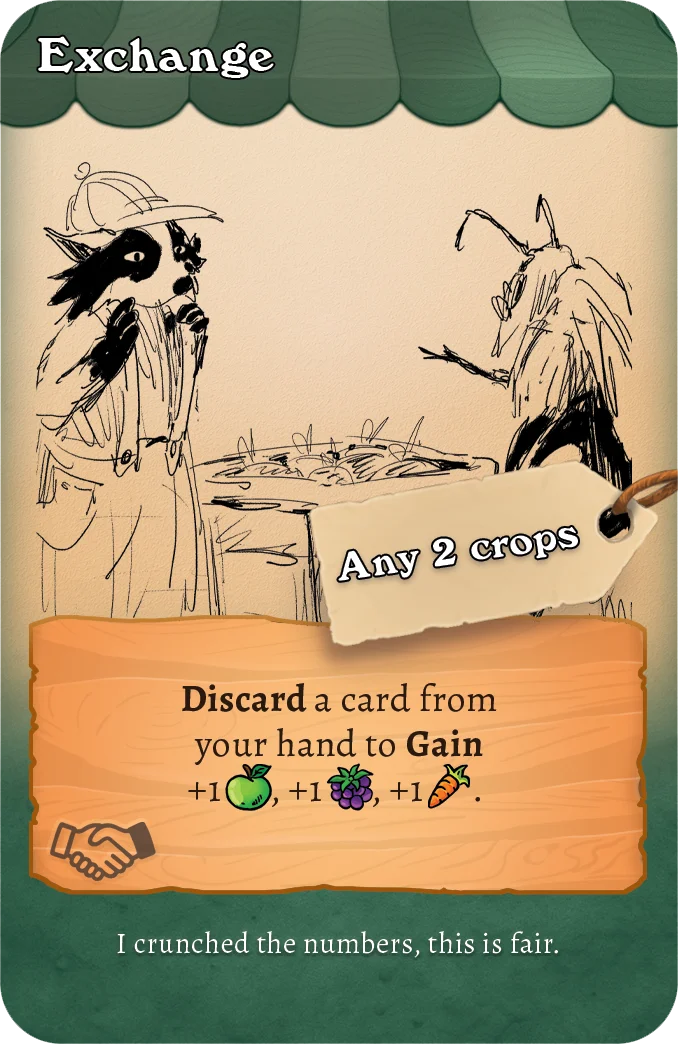
Example of a discard effect
Replant
Take a from your Discard pile and put it into play. It's now Planted, exactly as if played from your hand.
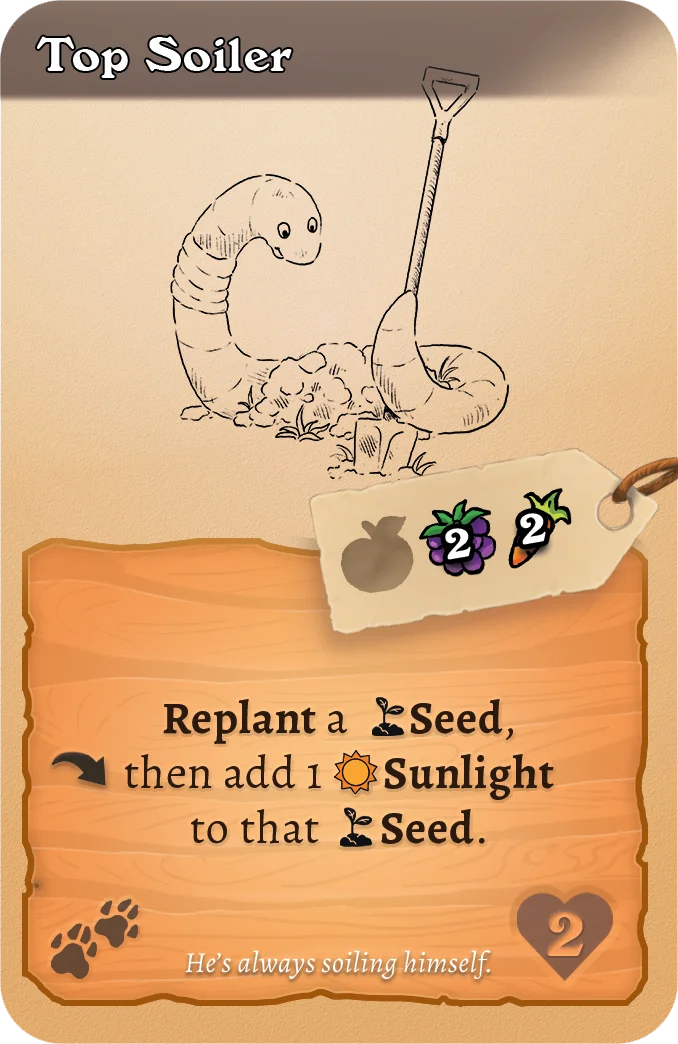
Example of a Seed Plant effect
Reset (deck)
Shuffle your Discard pile face-down into a new Draw pile. This happens automatically whenever you must draw from an empty pile, and some effects instruct it directly.
Some effects trigger whenever your deck is Reset.
Unsellable
UNSELLABLE cards can never be , by any means. They can still be or .
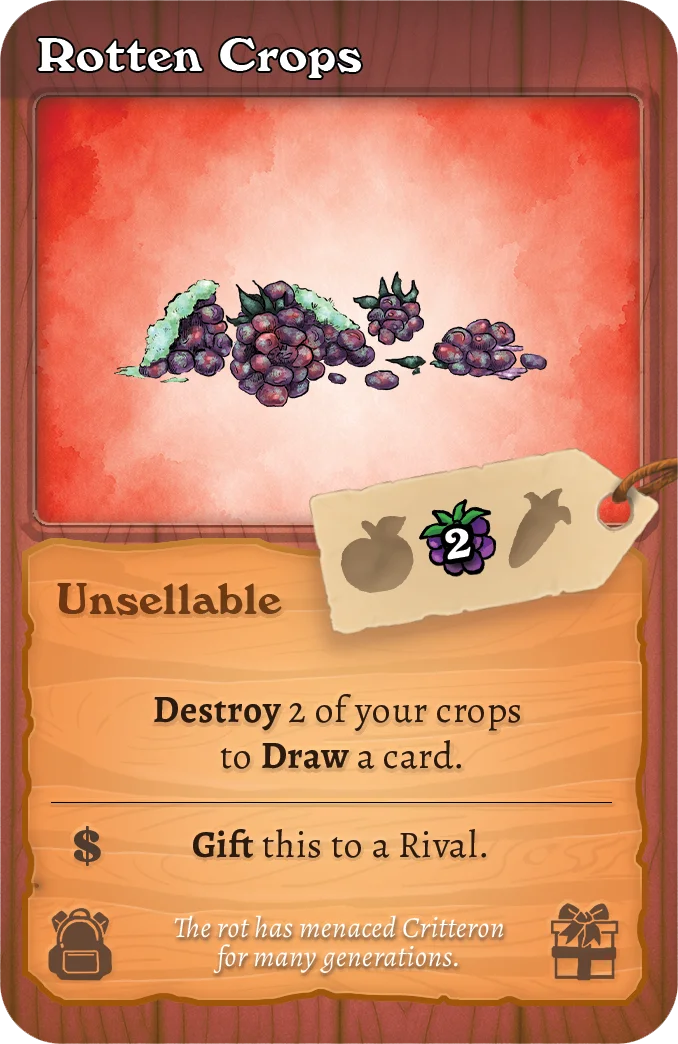
Example of an Unsellable effect.
Holdable
HOLDABLE cards may be kept in hand at the end of your turn instead of being discarded. Reveal the card to every other player, then keep it.
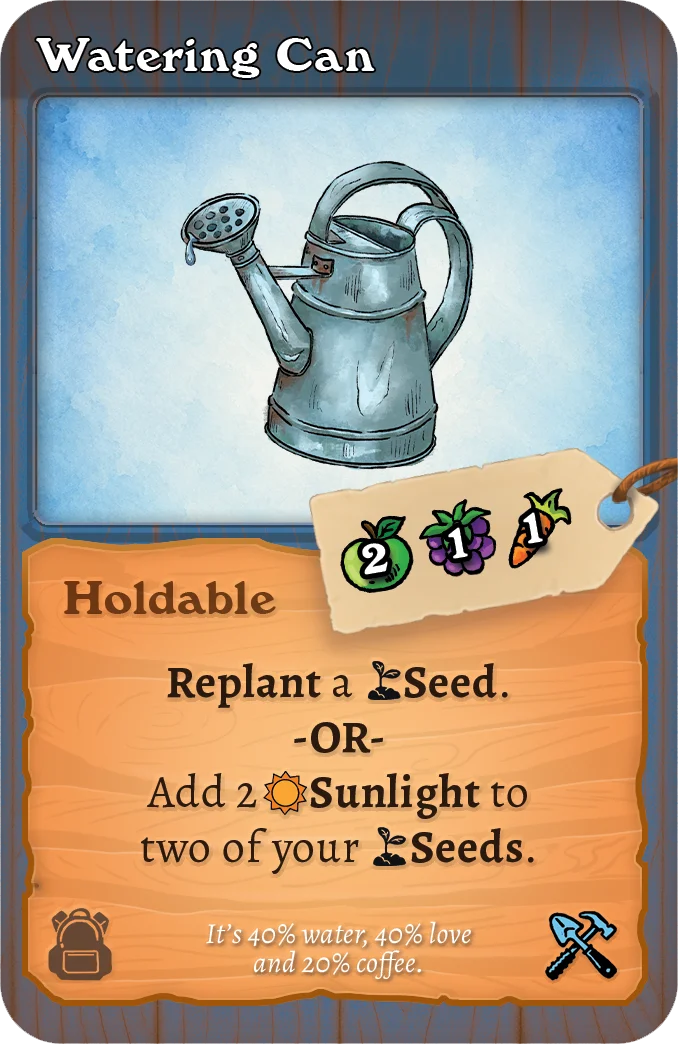
Example of a Holdable effect.
Refundable
REFUNDABLE cards can be directly from your hand instead of being played.
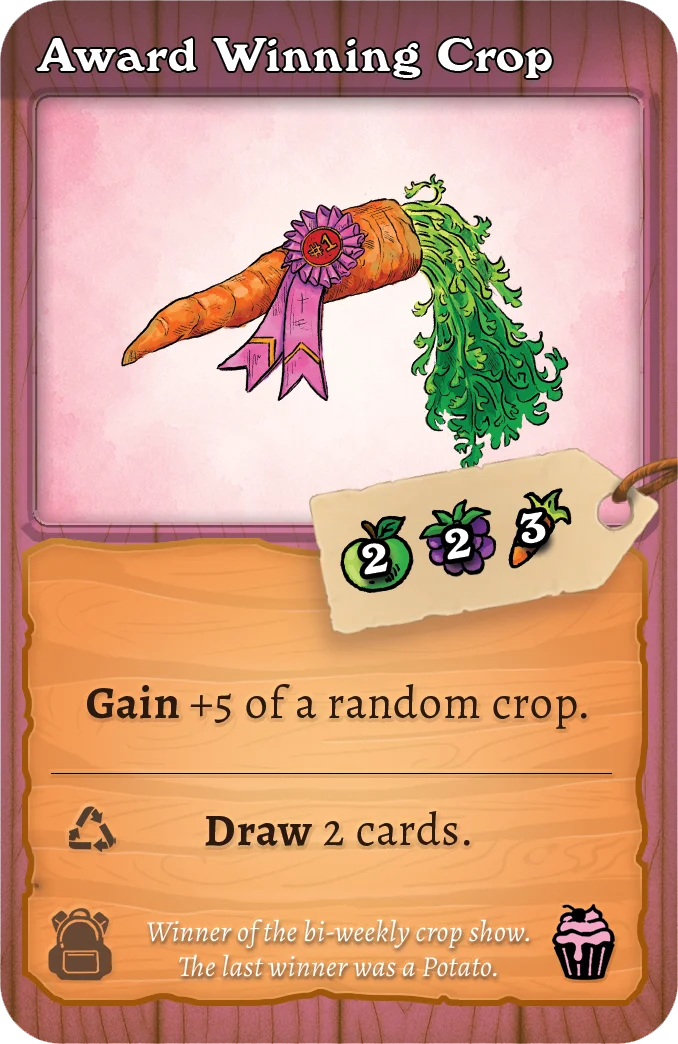
Example of a Refundable effect.
Icons
Exchange
A card section marked with a $ icon is its effect. It triggers when the card is Bought or :
- On Buy: the effect resolves before the card reaches your discard pile.
- On Sell: the effect resolves before the card leaves your deck.
Recycle
A card section marked with a recycle icon is its effect. It triggers when the card is during your turn, or :
- On Discard: the effect resolves before the card reaches your discard pile.
- On Trash: the effect resolves before the card leaves your deck.
Tips for beginners
Rules digested and still losing to your little sibling? A few habits that win games:
Production first
The most common beginner mistake is buying too early. Spend your first turns buying Farm cards that grow crops. A farm that produces 6 crops a turn completes orders twice as fast as one producing 3. Start packing once your engine hums.
Keep your deck lean
Every card you add dilutes every card you already have. or your cards as better ones arrive. A small deck of strong cards loops faster and draws its best cards more often.
Watch the Market, and your Rivals
The Market is shared. If a card is perfect for a Rival's strategy, buying it first, or it away, can hurt them more than it helps you. And keep an eye on Rival counts: at 4, every unfinished of yours is on the clock.
It's a marathon, not a sprint
Five takes a while. that need three turns to grow, that a big next turn, bonuses that compound. The patient plays usually beat the flashy ones. Plan a turn ahead, and spend your crops like a farmer, not a gambler.